
Hi,
To all new subscribers: Welcome to the SMARTIE Buddy Newsletter, brimming with strategies that bring clarity and practicality!
Today I’ll address two questions we got:
- Here’s one:
As a classroom teacher, I have many students who are struggling with organization: supplies are scattered, books are misplaced, and papers are crumpled or lost.➡️ How do I support them so they can keep up and function independently? - And here’s another one:
Last Tuesday, I watched my student stand in front of her open backpack for a solid three minutes. She wasn’t daydreaming. She wasn’t being defiant. She looked lost and was simply… stuck. “What do I need for the math review?” she muttered to herself, staring at the pile of books, folders, and (somehow) yesterday’s snack wrapper.➡️I wanted to jump in and pack it for her. But I paused and thought: What’s really going on in her brain right now? I need clarity.
Executive Function it is.
You’ve probably heard this term tossed around in the teachers’ room or at therapy sessions. But what does it actually mean? And more importantly, why does it matter so much for our kids?
What Exactly IS Executive Function?
Dr. Russell Barkley, often called the “Father of Executive Function,” describes it beautifully:
Executive Function is self-direction (self-cueing) for a future goal.
Tera Sumpter expands on this thought:
Our Executive Function system is our CUeing system, not our DOing system.
Think of it this way: Executive Function is like the CEO of the brain, or the play director, making sure everyone knows their roles.
It’s not the engine that drives the car (that’s intelligence and skills).
It’s the navigation system that’s supposed to tell you when to turn, how to get there, and what to do when you hit unexpected traffic.
When that CEO is out for lunch?
That’s when we see kids who are smart, capable, and willing—but somehow can’t get from Point A (backpack on the floor) to Point B (backpack packed and ready).
Here is what my son thought of when he did not trust his cueing system.
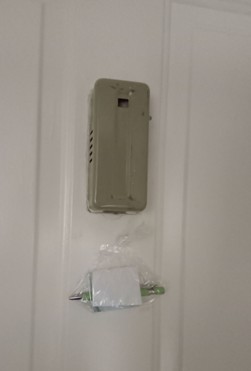 (taped important paper and pen to the door)
He did not trust himself to remember, so he did something he could not miss on his way out of the house.
💭 Think about your students or children. Where do they get stuck? Are you finding that EF skills need support? If so, in what aspect?
What can you do to support it?
Note the SMART Quote:
- Ensure shoes are prepared the night before (same spot, every night and by the child)
- Create routines and processes that will support overall organization and function, such as backpack clean-up, household chores, morning and night routines, errands, and other responsibilities
- Have a set time designated for homework (so your child or student is cued by the time) instead of asking or reminding, and asking or reminding, and then Again.
- In the classroom: create systems for book organization, school supplies check-ins, and paper filing. Then set aside time for quick check-ins to ensure the systems are being maintained.
“Think of executive functioning skills like the roots of a tree. They are the foundation for everything else.”
In the next few emails, we’ll be focusing on how to strengthen and support those roots.
Coming up: Planning to Plan- and why to do so. More questions? Need strategies on specific skills? Let us know, and we will try to address them!
Warmly,
Rachel Gluck